
Family Caregiver Agreements Kansas | Advanced Legal Planning
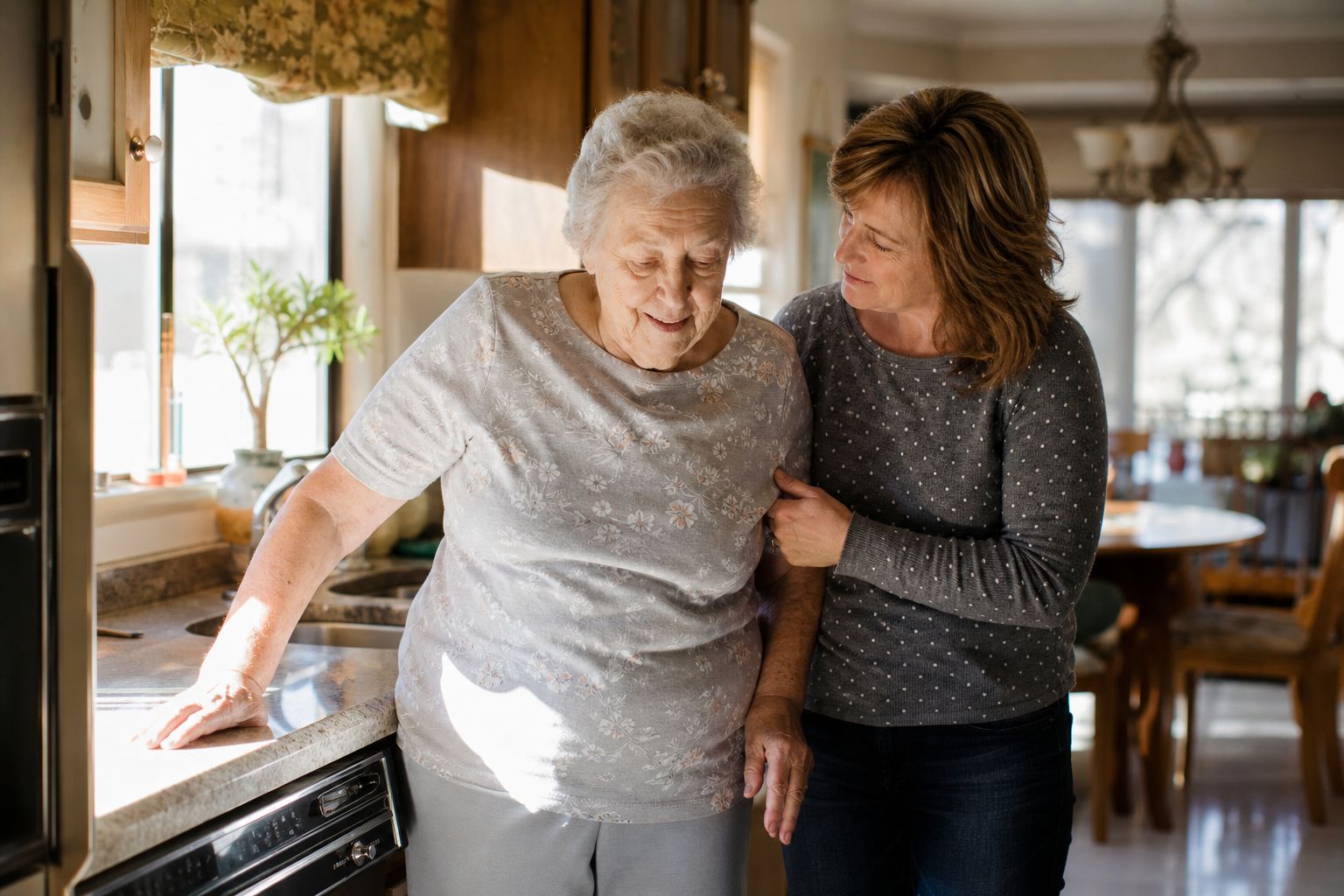
Kansas families are often surprised to learn that caring for an aging parent does not have to mean sacrificing your own paycheck. If you have quit a job, cut back your hours, or spent years driving your mom to doctor's appointments and helping her bathe and cook, a properly drafted caregiver agreement can let her pay you for that care, legally, and without jeopardizing her future Medicaid eligibility.
Millions of adult children across the country provide unpaid care for a parent, and Kansas is no exception. The problem is that informal payments, cash handed over at the kitchen table, a check with "for helping mom" written in the memo line, can create real ambiguity about what actually happened. Without a properly documented caregiver agreement, payments from a parent to a child for caregiving services may be viewed by Medicaid as gifts rather than legitimate compensation for services provided, and gifts trigger penalties. A caregiver agreement, sometimes called a personal care contract, fixes that.
What Is a Caregiver Agreement
A caregiver agreement is a written, signed contract between a care recipient, often an aging parent, and a caregiver, often an adult child, that spells out the services provided, the hours worked, and the rate of pay. Once in place, payments made under the agreement are treated as payment for services, not as an uncompensated transfer of assets.
This matters enormously in Kansas, where Medicaid enforces a 60 month look back period on asset transfers. Any gift made during that window, even a well intentioned one, can create a penalty period that delays a parent's eligibility for nursing home or long term care benefits. A signed caregiver agreement, backed by real services and fair market pay, keeps those same dollars from being treated as a disqualifying gift.
Why Kansas Families Use Them
For families in Derby, Wichita, and across Kansas, a caregiver agreement solves two problems at once. First, it compensates the family member who has been providing free labor, often for years, driving to appointments, managing medications, cooking, cleaning, and simply being present. Second, it allows a parent's money to be spent down toward Medicaid's asset limit in a way Medicaid will not later challenge.
Kansas allows caregivers to be paid through several channels, including KanCare's Home and Community Based Services waivers, which let a Medicaid recipient direct their own care and hire a family member as a paid provider. Outside of a waiver program, a private personal care agreement between family members works the same way, provided it is documented properly before any money changes hands. For families who are still years away from needing long term care, this same tool can be paired with earlier planning, so the caregiver is compensated fairly along the way rather than waiting until a crisis forces the issue.
What Makes a Caregiver Agreement Valid
Kansas caseworkers and Medicaid reviewers look closely at these agreements, and a handshake deal will not hold up. To be effective, an agreement generally needs the specific services to be provided, such as transportation, meal preparation, medication management, or personal hygiene assistance. It needs a clearly stated hourly rate that matches fair market value for those services in your area, a schedule for when and how payment will be made, and a signature from both parties, dated before any services begin or payments are made.
The timing matters as much as the paperwork. An agreement signed after the fact, to explain money that already changed hands, is not sanctioned by Kansas Medicaid regulations. The agreement can only cover payments made after the signing of the caregiver agreement. Caregivers should also keep a simple log of hours worked and tasks performed, since Medicaid can ask for documentation years later, sometimes well after the agreement has ended.
Common Mistakes That Cause Problems
Caregiver agreements are one of the most misused Medicaid planning tools, mostly because families try to draft them without legal guidance. The two biggest issues we see are overpayment and missing documentation. If the rate exceeds what a home care agency would charge for the same services in Kansas, Medicaid can treat the excess as a disguised gift. Without a signed contract and a record of services rendered, informal payments almost always get treated as transfers subject to the five year look back.
Payments received under a caregiver agreement are compensation for services and must be treated as income by the caregiver. The caregiver must report that income on the appropriate tax return and pay any taxes due. A caregiver agreement should not be viewed as a way to transfer money tax free, it is a legitimate arrangement in which the caregiver is being paid for actual services provided.
Families sometimes also try to pay a lump sum for future care rather than paying as services are provided. Lump sum arrangements draw far more scrutiny, since Medicaid will ask what happens to the unused portion if the parent passes away sooner than expected, or needs less care than planned.
Don't Wait Until There Is a Medicaid Crisis
One of the most important reasons to put a caregiver agreement in place early is that these agreements generally cannot be created after the fact to compensate a child for years of unpaid care.
We sometimes meet families at Advanced Legal Planning when they are already in a crisis. A parent needs nursing home care, the family is trying to qualify that parent for Medicaid, and they also want to preserve as much of the parent's assets as legally possible. Then we learn that a son or daughter has already spent years providing substantial care without being paid.
If a properly structured caregiver agreement had been in place during those years, the parent could have been paying the child for legitimate services as those services were performed. Depending on the amount of care being provided, those payments can become very significant. But when there was no caregiver agreement in place, we generally cannot simply go back years later and characterize prior unpaid caregiving as though payments had been made under an existing agreement.
Consider a parent who has moved into a child's home. The child may prepare three meals a day, clean, do laundry, provide companionship, maintain the yard, assist the parent in getting in and out of a chair, help with toileting, and provide many other forms of day to day assistance.
It is not difficult for those services to total eight hours a day.
At eight hours per day for 30 days a month, compensated at $27 per hour, the value of that care would be $6,480 per month, or $77,760 per year. If that same level of care continued for four years, the total value of the services would be $311,040.
That illustrates why a caregiver agreement is not a minor planning detail. A family may think, we are just helping Mom, without realizing that they may be providing tens of thousands of dollars of care every year.
The time to address this is not when Mom or Dad is about to enter a nursing home and Medicaid eligibility has become an emergency. When substantial caregiving begins, families should consider whether a written caregiver agreement belongs in the planning so that legitimate compensation can occur prospectively, while the services are actually being provided.
How This Fits Into Estate Recovery Later
A caregiver agreement solves the immediate problem, spending down excess assets without triggering a penalty, but it is worth understanding what it does not do. Paying a caregiver reduces a parent's countable resources today, but it has no effect on Medicaid Estate Recovery after death. If the home is still titled in the parent's name when they pass away, Kansas can still pursue recovery against it for the cost of care that was paid, regardless of how faithfully a caregiver agreement was followed during their lifetime.
For families who want to protect the home itself, not just qualify for benefits sooner, a caregiver agreement usually needs to work alongside other planning tools, such as a properly structured trust. The two strategies are not competing with each other. One helps a parent qualify for care now, and the other protects what is left behind later.
If you have been caring for a parent without pay, you deserve to know your options, and your parent's future Medicaid eligibility deserves to be protected at the same time. A caregiver agreement, drafted correctly and put in place before payments begin, can accomplish both. Learn more about how this fits into a broader Medicaid planning strategy on our Elder Law and Medicaid Planning page.
For more on how Kansas structures paid caregiving through Medicaid waivers, the Kansas Department for Aging and Disability Services outlines the self direction option at kdads.ks.gov.
Ready to protect your home, savings, and family's future? Call Advanced Legal Planning at (316) 252-2233 or schedule a consultation online. Virtual meetings available.